Today the LA Times published an article on our garden. Along with some wonderful photos, the garden received some great praise. Pasted below, the article can also be found here: http://latimesblogs.latimes.com/home_blog/2010/11/skid-row-community-garden.html with some outstanding photos.
Skid Row Community Garden: bounty by the bucket
November 10, 2010 7:00 am
Community gardens dispatch No. 7: Skid row, Los Angeles
The newest community garden in Los Angeles has no soil, bakes in all-day sun and is seen by few outsiders except those who pass above in helicopters.
The Skid Row Community Garden is on the roof of a four-story building on South Main Street, between 5th and 6th streets in downtown L.A. It's part of the Los Angeles Community Action Network, an 11-year-old organization with more than 600 members working with homeless and low-income people in the Skid Row area, a population that by some estimates totals about 13,000.
Pete White, founder and co-director of the group, points to the south noting that just a few blocks away is the produce market, the hub for much of Southern California's fresh fruit and vegetables, but the residents of downtown wouldn't know it. Want a definition of food insecurity? Try to buy a fresh carrot around here.
"If the city can't get fresh produce to skid row, we'll grow our own," he says.
The garden is young, started in late June with tomatoes, peppers and herbs, everything planted in plastic containers. Now, with the help of master gardeners Anne Hars and Maggie Lobl, the first fall crop will be going in: fava beans, radishes, brassicas such as kale and mustard, peas, herbs, micro-greens and catnip, the last two intended for downtown restaurants and pet emporiums, a potential revenue source.
The building had been the home of an Army-Navy department store with an unreliable elevator. Even though the summer was mild, gardeners had to trudge up more than 100 steps to water plants on the roof, sometimes twice a day during a heat wave.
For the fall crop, Hars enlisted the help of Erik Knutzen, co-author of "The Urban Homestead." Using a 1917 design, he showed the volunteers how to construct a self-irrigating pot system, or SIP, using two 5-gallon paint buckets, an 18-inch piece of 1-inch plastic pipe and a plastic party cup. (See the YouTube video or read full instructions.) The SIPs work off the wicking method, drawing water up from a bottom reservoir to feed the roots. Though others do use potting soil, the growing medium at the skid row garden is not dirt but a soil-less compound, similar to a seed starter.
It's a nutritional mix that is just the right weight," Hars says. "The water wicks up nicely and doesn't get too soggy at the bottom. If you used regular dirt, there would be no wicking action."
The first two SIPs are a few weeks old and are thriving. The fava beans are bursting out of the protective sheeting on top in a thick bouquet.
"They're doing better than my ones at home are," Hars says.
-- Jeff Spurrier
Last Thursday we welcomed Jeff Spurrier and Ann Summa to our bi-weekly Team Food meeting, where we built additional earth-boxes, and planted additional winter crops.
Wednesday, November 10, 2010

Wednesday, October 20, 2010
Home-made earth boxes
Today has been another great day at LACAN. We came together to construct some earth boxes. Earth boxes are essentially pots with multiple chambers and a water reservoir that allow plants to self-regulate their water supply. Translated for those of us just learning our way around a garden, with earth boxes, when our plants get thirsty they will have a reservoir of water at hand to drink.

The last few weeks of strange southern California have shown us how nice this arrangement might be. One week we had soaring temperatures, even breaking the historic record for heat! Then the next week we had rain and cold. Because our garden is located on our rooftop, our plants are especially exposed to the elements, meaning that they take a real beating from sun, wind, and rain. While we have been amazing with our watering schedule -- despite the 101 steps we have to climb each day -- our plants will no doubt benefit from some earth boxes.

We learned a great design and started building. We'll finish our boxes in our next Team Food meeting 11-4-10, so stay tuned.
Wednesday, October 6, 2010
Seed starting workshop today
Today we gathered residents and LACAN staff and friends to participate in our seed starting workshop. After much anticipation, we gathered and got our hands dirty. Anne brought her expertise and showed us exactly how to plant seeds so that we can eventually pot them and add them to our growing garden.


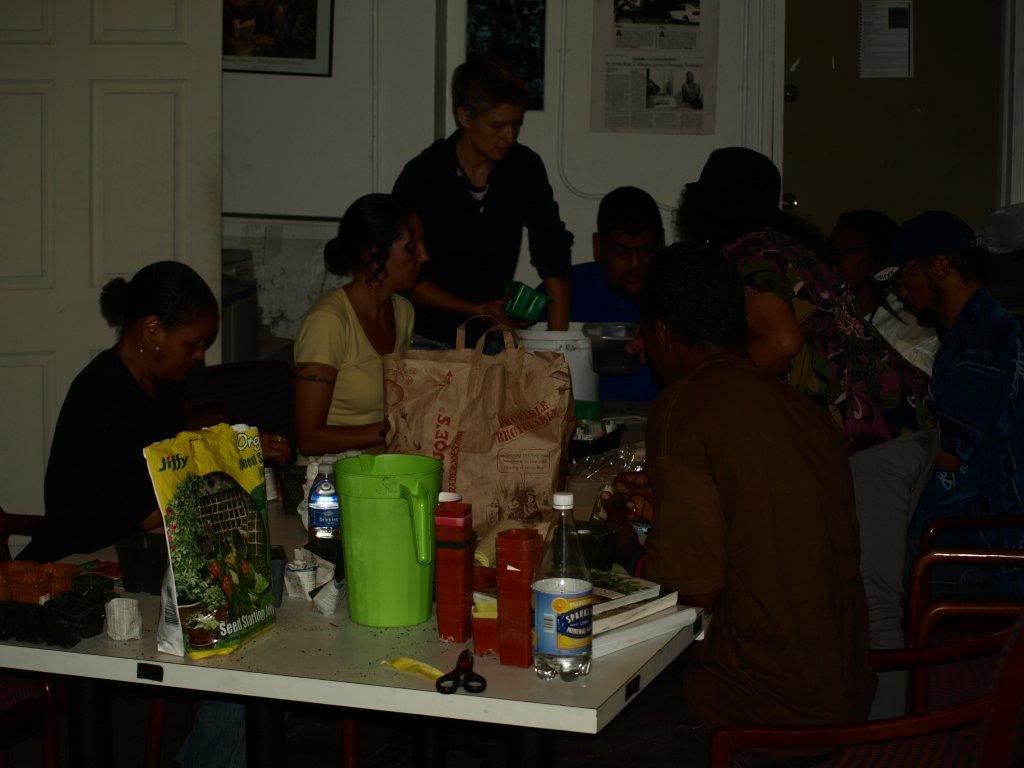
We don't have a whole lot of land, green spaces, or plots in downtown. After all, that's why we went vertical -- to the roof. But, seedlings don't require much space at all. Just some sun and a little TLC. When we first began the garden, we had a few seedlings that our gardeners took home with them as they went from seeds to seedlings. A nice breezy window sill works fantastic.
This time, however, we were armed with much more expertise. Our wonderful master gardener, Maggie, has been talking for a while about planting seeds in small cups made of newspaper. As the plants start to make their way to the surface, when its time to pot them, there would be no need to transplant, since the newspaper would decompose in the pot! We thought it was a wonderful idea and we were excited to learn this little trick.
Thursday, September 2, 2010
Seed planting workshop planned
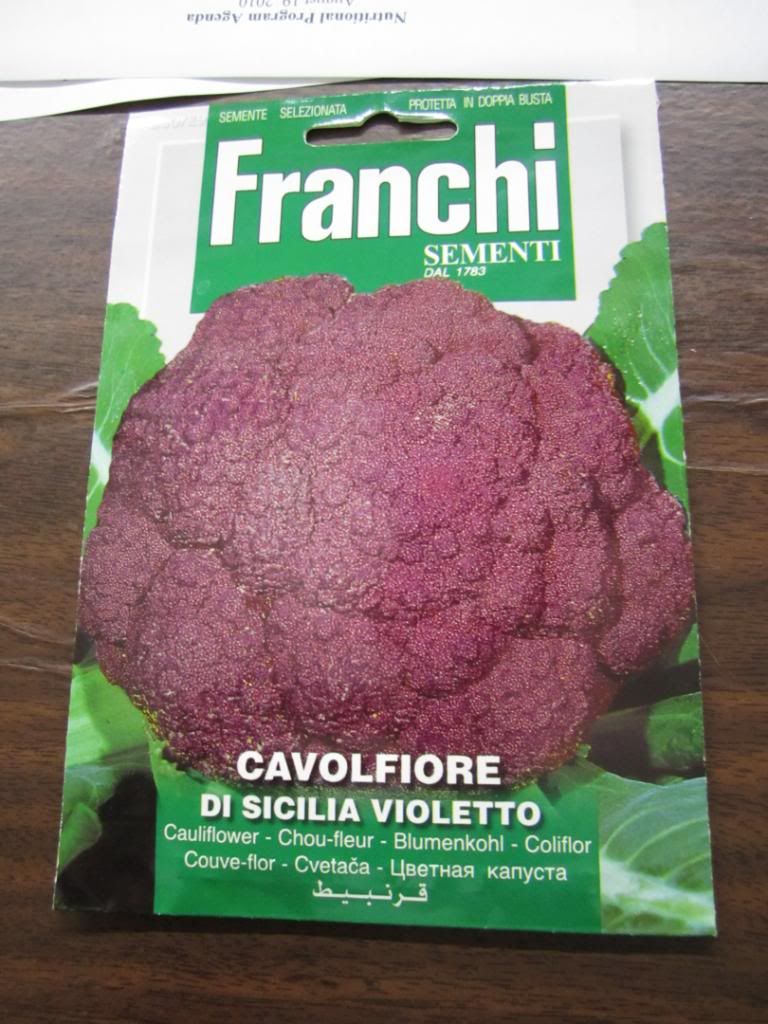
In our bi-weekly Team Food meeting today, we began the first steps toward expanding our garden in a significant way. Our partners in the Master Gardener program have volunteered to conduct a seed planting workshop in two weeks, on Thursday September 16th at 9am. We will be covering everything from containers to sunlight, to soil issues. Please join us if you're interested in growing your own seedlings. All you need is some sunlight and some patience!
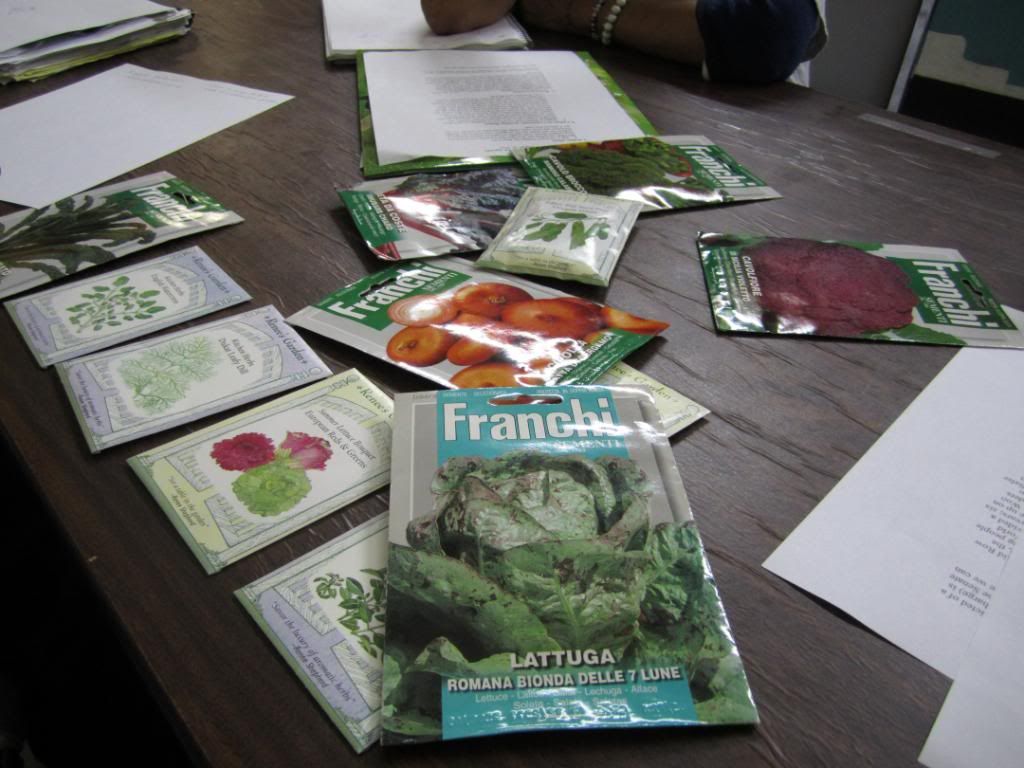
We are going to be trying out produce that is best suited for the fall season, from Cauliflower to Lettuce, Chard, and Herbs.
The seeds we will be using come from Italy. The region that they come from has a climate that is very similar to that found in sunny Southern California.
Monday, August 30, 2010
Herbs added
One of our goals from the beginning of this garden project has been to provide as much produce from our garden to community meals as possible. We've been holding workshops in the Skid Row community for quite some time teaching residents about the benefits of natural, organic, and non-processed seasonings. Our goal is to reduce the amount of sodium and artificial flavorings and preservatives that the community consumes.


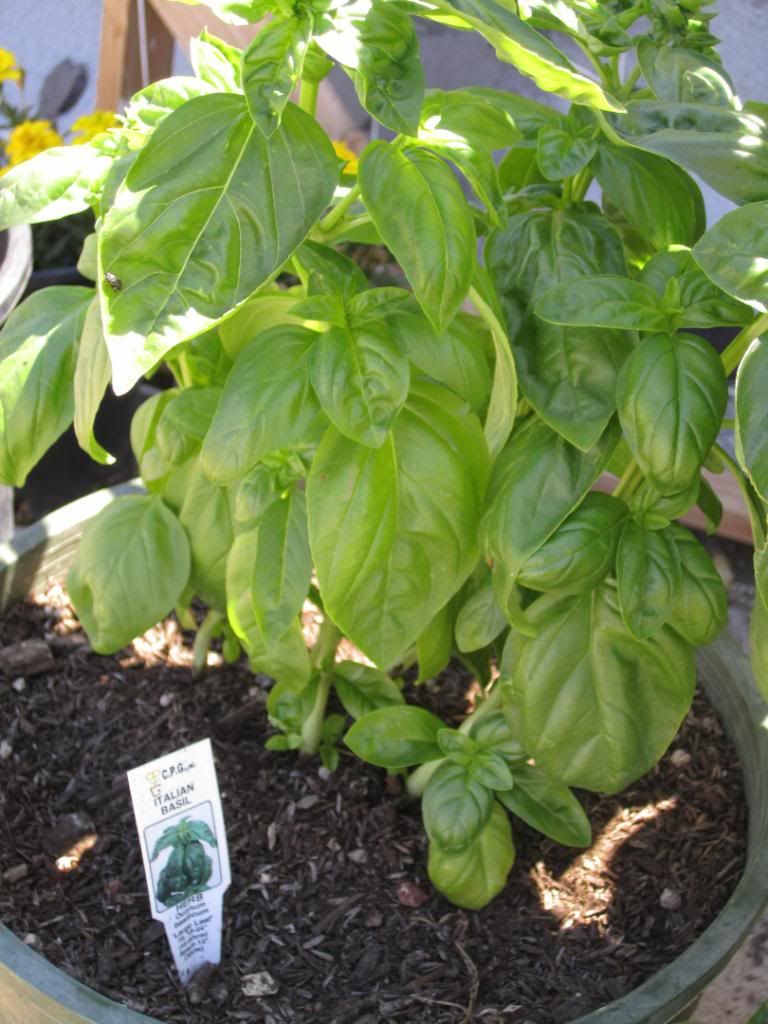
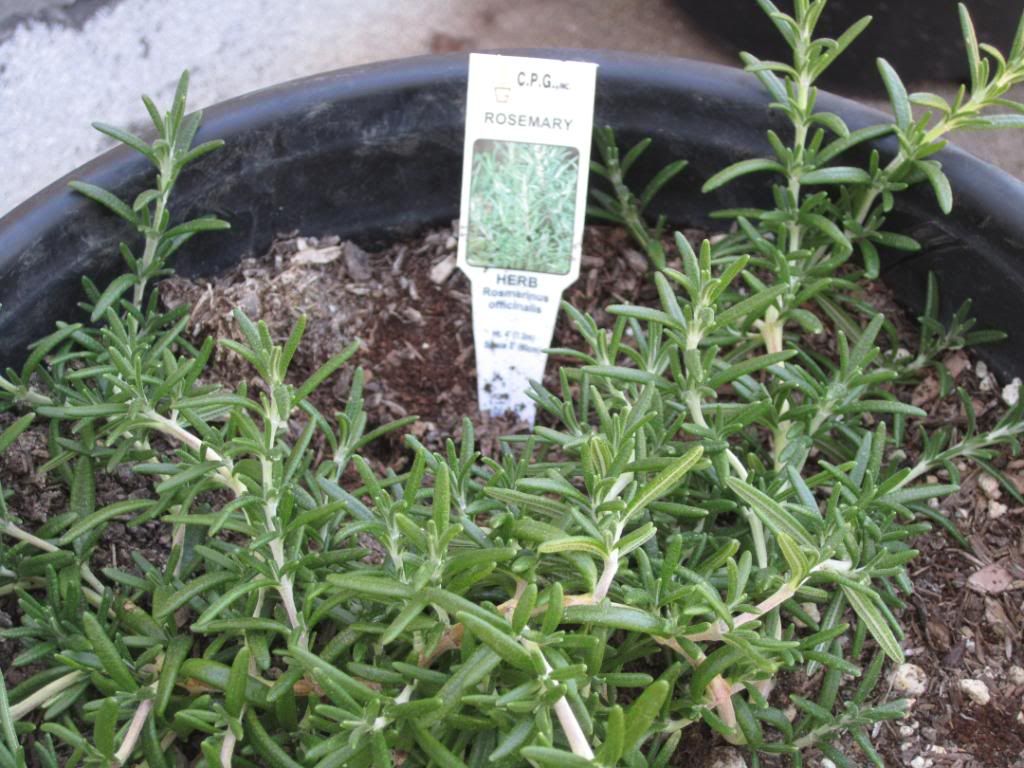
So...it's time for us to begin growing herbs. We have some new plants that are flourishing in our garden. These include Italian Basil and Rosemary.
Thursday, August 26, 2010
New harvests for our community meal
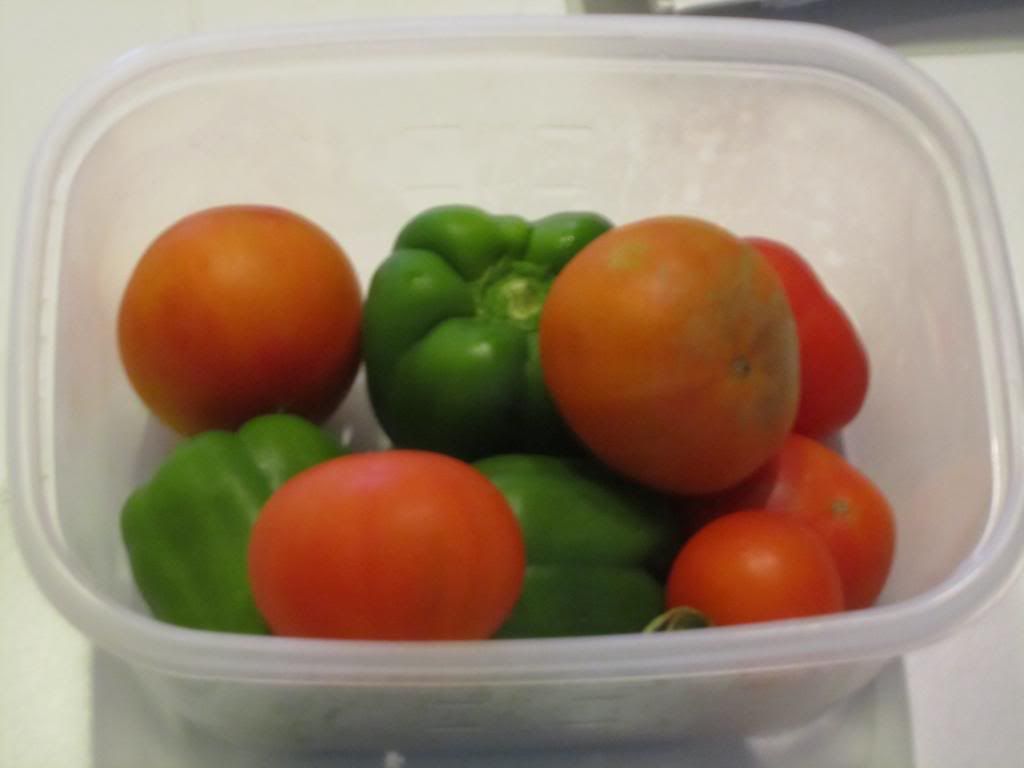 Two fridays per month, we hold a resident meeting at our office at 530 S. Main Street in downtown LA. This means that Thursdays are becoming a big harvesting day for us, and it allows us to see the various plants that are really coming along.
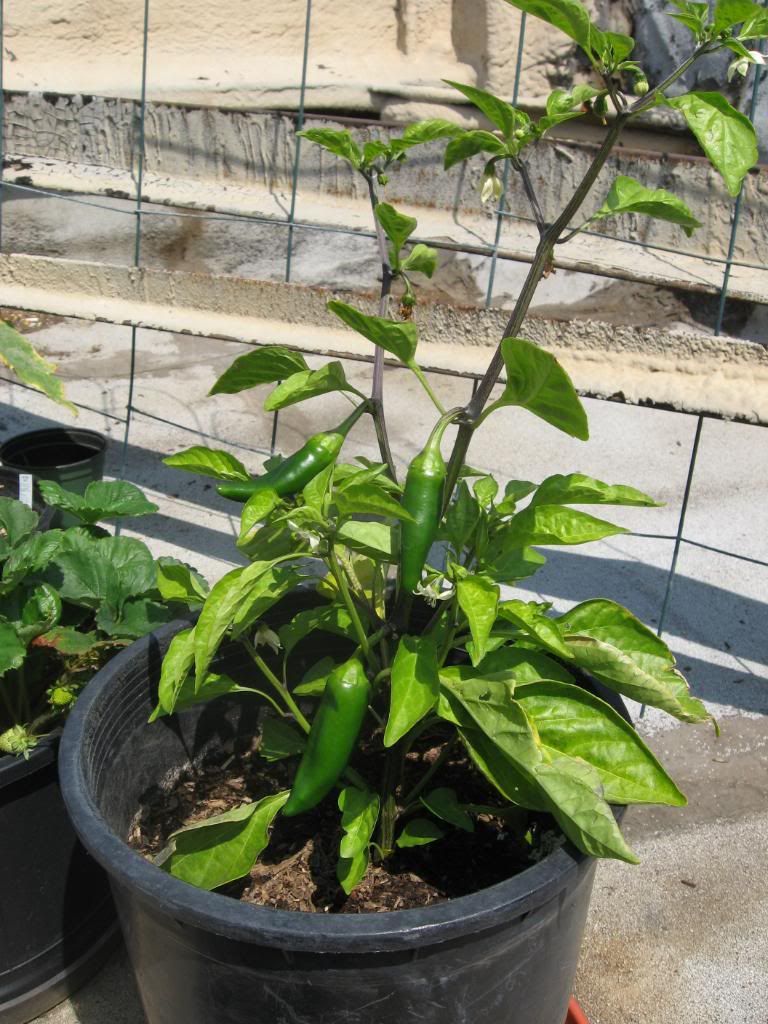
This week, our tomatoes have been consistently bigger, and we have a substantial number of peppers.
Good eats!
Thursday, August 5, 2010
Veggies galore!
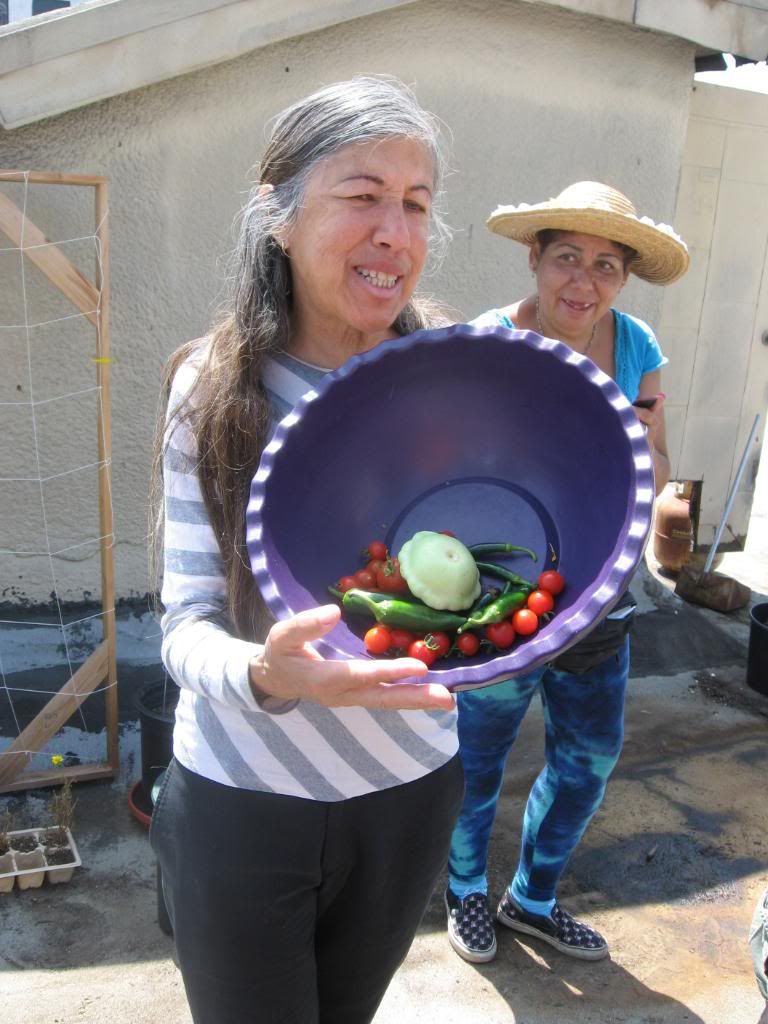 At this week's Team Food meeting, we were greeted on the roof by tomatoes, various peppers, and a squash that were ready to pick.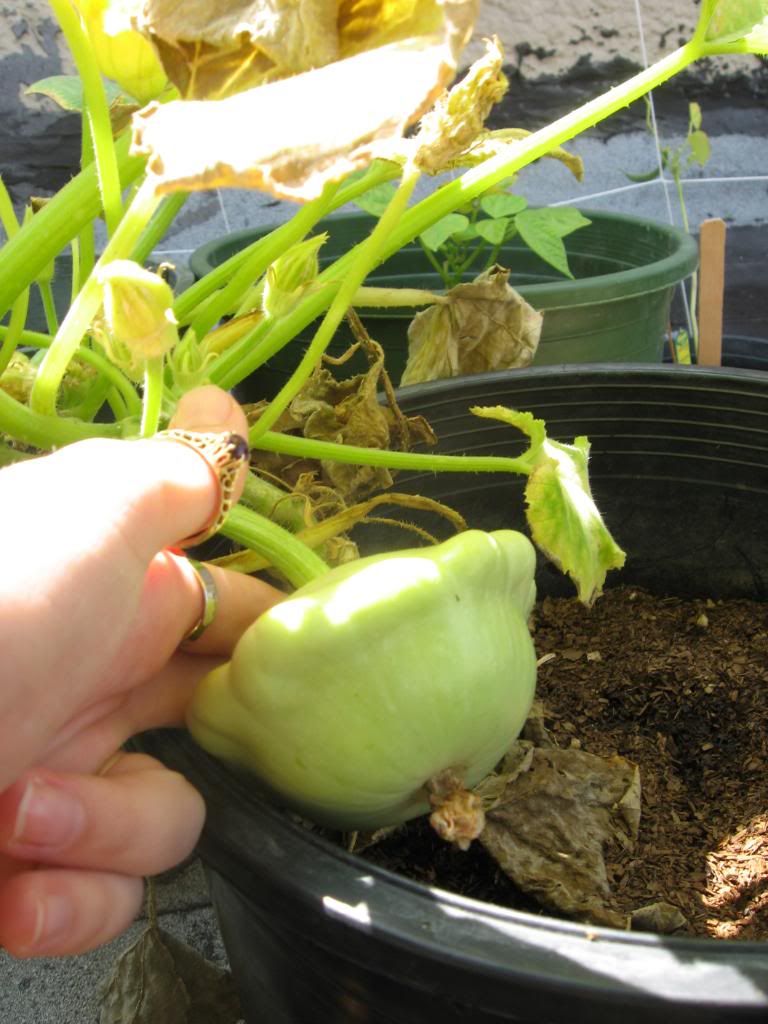
The plants are coming along better than even we had anticipated, so we're very excited. This means that our garden really works, and can only get better from here.
With this trial period over, we're ready to plant even more veggies to really increase the yield of the garden. We've been looking at new methods, such as "earth boxes" (see http://www.earthbox.com/).
Subscribe to:
Posts (Atom)